Articles | Volume 33, issue 3
https://doi.org/10.5194/npg-33-473-2026
© Author(s) 2026. This work is distributed under
the Creative Commons Attribution 4.0 License.
https://doi.org/10.5194/npg-33-473-2026
© Author(s) 2026. This work is distributed under
the Creative Commons Attribution 4.0 License.
Ensemble Kalman-guided model predictive path integral control for spatially localized suppression of extremes in chaotic geophysical flows

Haru Kuroki
Division of Electrical, Electronic and Infocommunications Engineering, Graduate School of Engineering, The University of Osaka, Suita, Japan
Kazumune Hashimoto
CORRESPONDING AUTHOR
Division of Electrical, Electronic and Infocommunications Engineering, Graduate School of Engineering, The University of Osaka, Suita, Japan
Yuki Uehara
Division of Electrical, Electronic and Infocommunications Engineering, Graduate School of Engineering, The University of Osaka, Suita, Japan
Yohei Sawada
Department of Civil Engineering, Graduate School of Engineering, The University of Tokyo, Tokyo, Japan
Duc Le
Department of Civil Engineering, Graduate School of Engineering, The University of Tokyo, Tokyo, Japan
Masashi Minamide
Department of Civil Engineering, Graduate School of Engineering, The University of Tokyo, Tokyo, Japan
Related authors
No articles found.
Amane Kubo and Yohei Sawada
EGUsphere, https://doi.org/10.5194/egusphere-2026-3915, https://doi.org/10.5194/egusphere-2026-3915, 2026
This preprint is open for discussion and under review for Earth System Dynamics (ESD).
Short summary
Short summary
The Atlantic Ocean's current system stabilizes global climate, but scientists fear its collapse. Climate assessments often overlook how uncertainty in the model parameters affect predictions. This study addresses this gap and provides a framework for this issue. Our findings show that sea surface salinity reduces prediction uncertainty of the occurrence of current slow down, whereas the remaining uncertainty is huge, which implies importance of considering the uncertainty in model parameters.
Md. Rezuanul Islam, Htut Naing Thwin, Hiroshi Takagi, and Yohei Sawada
EGUsphere, https://doi.org/10.31223/X50X94, https://doi.org/10.31223/X50X94, 2026
This preprint is open for discussion and under review for Natural Hazards and Earth System Sciences (NHESS).
Short summary
Short summary
Many cities around Northeast Indian Ocean lack long records needed to estimate rare storm surges. Furthermore, estimating rare surges with only one statistical method can hide uncertainty. We analyzed 1950–2024 reanalysis surge data for 11 cities using an ensemble approach. Results show that rare events became more frequent in some central basin cities but less frequent in western and outer-basin cities. The study shows that using ensemble approach gives a clearer picture of present surge risk.
Yohei Sawada and Shinichi Okugawa
EGUsphere, https://doi.org/10.5194/egusphere-2025-4984, https://doi.org/10.5194/egusphere-2025-4984, 2025
Short summary
Short summary
We studied how best to handle uncertainty in hydrological models that simulate how rain becomes river flow. We tested a well-known Bayesian way to estimate uncertainty in model settings as well as in model design. This approach helps judge which models are better considering their uncertainty. However, considering uncertainty in model settings is not helpful to provide river flow forecasting, so costly Bayesian tuning is rarely justified for practical purposes.
Sneha Kulkarni, Yohei Sawada, Yared Bayissa, and Brian Wardlow
Hydrol. Earth Syst. Sci., 29, 4341–4370, https://doi.org/10.5194/hess-29-4341-2025, https://doi.org/10.5194/hess-29-4341-2025, 2025
Short summary
Short summary
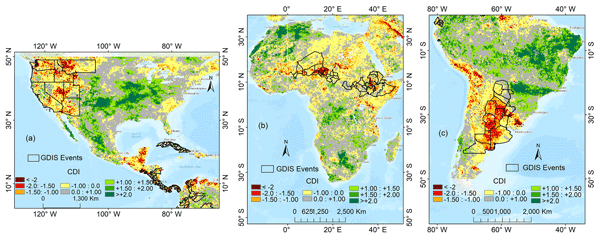
How drought impacts communities is complex and not yet fully understood. We examined a disaster dataset and compared various drought measures to pinpoint affected regions. Our new combined drought indicator (CDI) was found to be the most effective in identifying drought events compared to other traditional drought indices. This underscores the CDI's importance in evaluating drought risks and directing attention to the most impacted areas.
Yohei Sawada
EGUsphere, https://doi.org/10.48550/arXiv.2403.06371, https://doi.org/10.48550/arXiv.2403.06371, 2024
Preprint archived
Short summary
Short summary
It is generally difficult to control large-scale and complex systems, such as Earth systems, using small forces. In this paper, a new method to control such systems is proposed. The new method is inspired by the similarity between simulation-observation integration methods in geoscience and model predictive control theory in control engineering. The proposed method is particularly suitable to find the efficient strategies of weather modification.
Le Duc and Yohei Sawada
Hydrol. Earth Syst. Sci., 27, 1827–1839, https://doi.org/10.5194/hess-27-1827-2023, https://doi.org/10.5194/hess-27-1827-2023, 2023
Short summary
Short summary
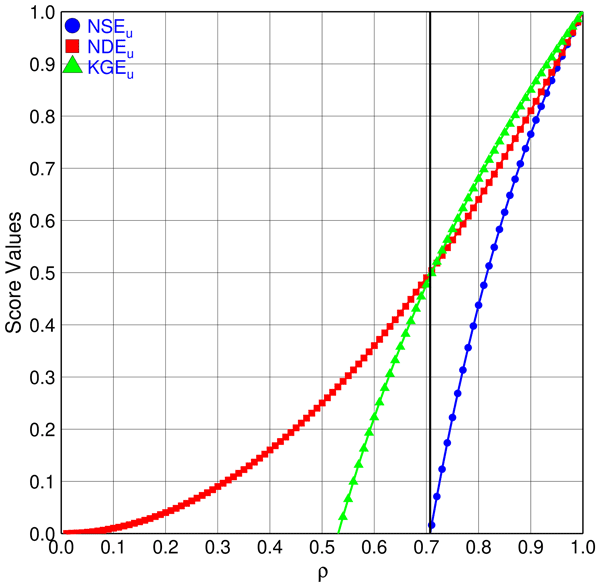
The Nash–Sutcliffe efficiency (NSE) is a widely used score in hydrology, but it is not common in the other environmental sciences. One of the reasons for its unpopularity is that its scientific meaning is somehow unclear in the literature. This study attempts to establish a solid foundation for NSE from the viewpoint of signal progressing. This approach is shown to yield profound explanations to many open problems related to NSE. A generalized NSE that can be used in general cases is proposed.
Yuya Kageyama and Yohei Sawada
Hydrol. Earth Syst. Sci., 26, 4707–4720, https://doi.org/10.5194/hess-26-4707-2022, https://doi.org/10.5194/hess-26-4707-2022, 2022
Short summary
Short summary
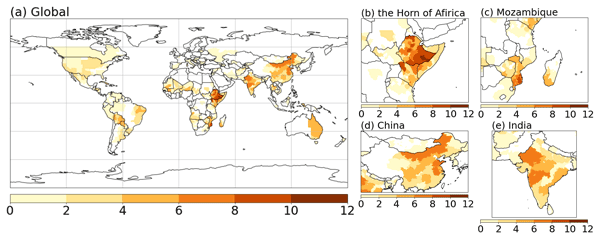
This study explores the link between hydrometeorological droughts and their socioeconomic impact at a subnational scale based on the newly developed disaster dataset with subnational location information. Hydrometeorological drought-prone areas were generally consistent with socioeconomic drought-prone areas in the disaster dataset. Our analysis clarifies the importance of the use of subnational disaster information.
Yohei Sawada, Rin Kanai, and Hitomu Kotani
Hydrol. Earth Syst. Sci., 26, 4265–4278, https://doi.org/10.5194/hess-26-4265-2022, https://doi.org/10.5194/hess-26-4265-2022, 2022
Short summary
Short summary
Although flood early warning systems (FEWS) are promising, they inevitably issue false alarms. Many false alarms undermine the credibility of FEWS, which we call a cry wolf effect. Here, we present a simple model that can simulate the cry wolf effect. Our model implies that the cry wolf effect is important if a community is heavily protected by infrastructure and few floods occur. The cry wolf effects get more important as the natural scientific skill to predict flood events is improved.
Futo Tomizawa and Yohei Sawada
Geosci. Model Dev., 14, 5623–5635, https://doi.org/10.5194/gmd-14-5623-2021, https://doi.org/10.5194/gmd-14-5623-2021, 2021
Short summary
Short summary
A new method to predict chaotic systems from observation and process-based models is proposed by combining machine learning with data assimilation. Our method is robust to the sparsity of observation networks and can predict more accurately than a process-based model when it is biased. Our method effectively works when both observations and models are imperfect, which is often the case in geoscience. Therefore, our method is useful to solve a wide variety of prediction problems in this field.
Cited articles
Cotton, W. R., Zhang, H., McFarquhar, G. M., and Saleeby, S. M.: Should we consider polluting hurricanes to reduce their intensity, J. Weather Mod., 39, 70–73, https://doi.org/10.54782/001c.132992, 2007. a
Henderson, J. M., Hoffman, R. N., Leidner, S. M., Nehrkorn, T., and Grassotti, C.: A 4D-Var study on the potential of weather control and exigent weather forecasting, Q. J. Roy. Meteor. Soc., 131, 3037–3051, https://doi.org/10.1256/qj.05.72, 2005. a
Houtekamer, P. L. and Zhang, F.: Review of the Ensemble Kalman Filter for Atmospheric Data Assimilation, Mon. Weather Rev., 144, 4489–4532, https://doi.org/10.1175/MWR-D-15-0440.1, 2016. a
Jacobson, M. and Kempton, W.: Taming hurricanes with arrays of offshore wind turbines, Nat. Clim. Change, 4, https://doi.org/10.1038/nclimate2120, 2014. a
Jones, D. R., Schonlau, M., and Welch, W. J.: Efficient Global Optimization of Expensive Black-Box Functions, J. Global Optim., 13, 455–492, 1998. a
Kawasaki, F. and Kotsuki, S.: Leading the Lorenz 63 system toward the prescribed regime by model predictive control coupled with data assimilation, Nonlin. Processes Geophys., 31, 319–333, https://doi.org/10.5194/npg-31-319-2024, 2024. a
Latham, J., Parkes, B., Gadian, A., and Salter, S.: Weakening of hurricanes via marine cloud brightening (MCB), Atmos. Sci. Lett., 13, 231–237, https://doi.org/10.1002/asl.402, 2012. a
Lorenz, E. N.: Predictability: a problem partly solved, in: Seminar on Predictability, Vol. I, ECMWF, Shinfield Park, Reading, UK, 1–18, https://www.ecmwf.int/en/elibrary/75462-predictability-problem-partly-solved (last access: 28 August 2026), 1995. a
Miller, J., Tang, A., Tran, T. L., Prinsley, R., and Howden, M.: The Feasibility and Governance of Cyclone Interventions, Climate Risk Management, 41, 100535, https://doi.org/10.1016/j.crm.2023.100535, 2023. a
Miyoshi, T. and Sun, Q.: Control simulation experiment with Lorenz's butterfly attractor, Nonlin. Processes Geophys., 29, 133–139, https://doi.org/10.5194/npg-29-133-2022, 2022. a
Ouyang, M., Tokuda, K., and Kotsuki, S.: Reducing manipulations in a control simulation experiment based on instability vectors with the Lorenz-63 model, Nonlin. Processes Geophys., 30, 183–193, https://doi.org/10.5194/npg-30-183-2023, 2023. a
Power, T. and Berenson, D.: Variational Inference MPC using Normalizing Flows and Out-of-Distribution Projection, arXiv [preprint], https://doi.org/10.48550/arXiv.2205.04667, 2022. a, b
Resseguier, V., Mémin, E., and Chapron, B.: Geophysical flows under location uncertainty, Part III SQG and frontal dynamics under strong turbulence conditions, Geophys. Astro. Fluid, 111, 209–227, https://doi.org/10.1080/03091929.2017.1312102, 2017. a, b, c, d
Sawada, Y.: Quest for an efficient mathematical and computational method to explore optimal extreme weather modification, arXiv [preprint], https://doi.org/10.48550/arXiv.2405.08387, 2024a. a, b, c, d
Sawada, Y.: Ensemble Kalman filter meets model predictive control in chaotic systems, SOLA, 20, 400–407, https://doi.org/10.2151/sola.2024-053, 2024b. a, b
Schneider, T., Stuart, A. M., and Wu, J.-L.: Ensemble Kalman inversion for sparse learning of dynamical systems from time-averaged data, J. Comput. Phys., 470, 111559, https://doi.org/10.1016/j.jcp.2022.111559, 2022. a, b
Shahriari, B., Swersky, K., Wang, Z., Adams, R. P., and de Freitas, N.: Taking the Human Out of the Loop: A Review of Bayesian Optimization, P. IEEE, 104, 148–175, 2016. a
Sun, Q., Miyoshi, T., and Richard, S.: Control simulation experiments of extreme events with the Lorenz-96 model, Nonlin. Processes Geophys., 30, 117–128, https://doi.org/10.5194/npg-30-117-2023, 2023. a
Vallis, G. K.: Atmospheric and Oceanic Fluid Dynamics: Fundamentals and Large-Scale Circulation, 2nd edn., Cambridge University Press, Cambridge, https://doi.org/10.1017/9781107588417, 2017. a
Williams, G., Drews, P., Goldfain, B., Rehg, J. M., and Theodorou, E. A.: Information-Theoretic Model Predictive Control: Theory and Applications to Autonomous Driving, IEEE T. Robot., 34, 1603–1622, https://doi.org/10.1109/TRO.2018.2865891, 2018. a, b
Willoughby, H. E., Jorgensen, D. P., Black, R. A., and Rosenthal, S. L.: Project STORMFURY: A Scientific Chronicle 1962–1983, B. Am. Meteorol. Soc., 66, 505–514, https://doi.org/10.1175/1520-0477(1985)066<0505:PSASC>2.0.CO;2, 1985. a
Zhang, H., McFarquhar, G. M., Saleeby, S. M., and Cotton, W. R.: Impacts of Saharan dust as CCN on the evolution of an idealized tropical cyclone, Geophys. Res. Lett., 34, L14812, https://doi.org/10.1029/2007GL029876, 2007. a
Short summary
We developed a method to plan tiny, local nudges that reduce spikes in weather-like simulations. It was motivated by the lack of reliable ways to design small interventions in unpredictable systems. The method uses many parallel forecasts to suggest where a nudge matters, then tests and refines it with repeated full-model simulations. In two models, it reduced extremes and peak regional wind speeds with similar or smaller input, enabling safer study of intervention ideas.
We developed a method to plan tiny, local nudges that reduce spikes in weather-like simulations....