
Articles | Volume 33, issue 3
https://doi.org/10.5194/npg-33-347-2026
© Author(s) 2026. This work is distributed under
the Creative Commons Attribution 4.0 License.
the Creative Commons Attribution 4.0 License.
https://doi.org/10.5194/npg-33-347-2026
© Author(s) 2026. This work is distributed under
the Creative Commons Attribution 4.0 License.
the Creative Commons Attribution 4.0 License.
Research article
| 
14 Jul 2026
Research article |
| 14 Jul 2026
| 14 Jul 2026
Formulation of parametric uncertainty forecasts towards operational wildfire smoke assimilation
Numerical Modeling and Prediction Research Division, Environment and Climate Change Canada (ECCC), Dorval, Quebec, Canada
Institute of Geophysics and Meteorology, University of Cologne, Cologne, Germany
Richard Ménard
Numerical Modeling and Prediction Research Division, Environment and Climate Change Canada (ECCC), Dorval, Quebec, Canada
James Abu
Numerical Modeling and Prediction Research Division, Environment and Climate Change Canada (ECCC), Dorval, Quebec, Canada
Jack Chen
Numerical Modeling and Prediction Research Division, Environment and Climate Change Canada (ECCC), Ottawa, Ontario, Canada
Related authors

Annika Vogel and Richard Ménard
Nonlin. Processes Geophys., 30, 375–398, https://doi.org/10.5194/npg-30-375-2023, https://doi.org/10.5194/npg-30-375-2023, 2023
Short summary
Short summary
Accurate estimation of the error statistics required for data assimilation remains an ongoing challenge, as statistical assumptions are required to solve the estimation problem. This work provides a conceptual view of the statistical error estimation problem in light of the increasing number of available datasets. We found that the total number of required assumptions increases with the number of overlapping datasets, but the relative number of error statistics that can be estimated increases.

Annika Vogel and Hendrik Elbern
Geosci. Model Dev., 14, 5583–5605, https://doi.org/10.5194/gmd-14-5583-2021, https://doi.org/10.5194/gmd-14-5583-2021, 2021
Short summary
Short summary
While atmospheric chemical forecasts rely on uncertain model parameters, their huge dimensions hamper an efficient uncertainty estimation. This study presents a novel approach to efficiently sample these uncertainties by extracting dominant dependencies and correlations. Applying the algorithm to biogenic emissions, their uncertainties can be estimated from a low number of dominant components. This states the capability of an efficient treatment of parameter uncertainties in atmospheric models.
Michael D. Moran, Verica Savic-Jovcic, Craig A. Stroud, Sylvain Ménard, Wanmin Gong, Junhua Zhang, Qiong Zheng, Jack Chen, Ayodeji Akingunola, Alexandru Lupu, Konstantinos Menelaou, and Rodrigo Munoz-Alpizar
Geosci. Model Dev., 19, 4137–4203, https://doi.org/10.5194/gmd-19-4137-2026, https://doi.org/10.5194/gmd-19-4137-2026, 2026
Short summary
Short summary
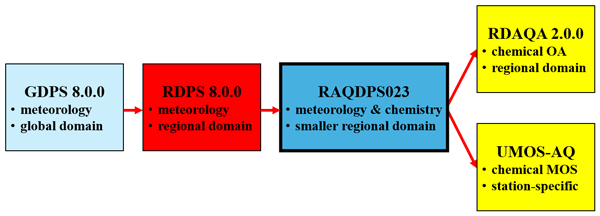
Canada's weather agency uses an online chemical weather forecast system to produce forecasts of key air pollutants over North America. Here we describe two recent versions of this Regional Air Quality Deterministic Prediction System (RAQDPS), including the meteorological host model, embedded chemistry module, and two downstream systems. Three simplifications to reduce run time are also described. A companion paper presents results from a comprehensive, 5-year evaluation of RAQDPS predictions.
Michael D. Moran, Alexandru Lupu, Verica Savic-Jovcic, Junhua Zhang, Qiong Zheng, Elisa I. Boutzis, Rabab Mashayekhi, Craig A. Stroud, Sylvain Ménard, Jack Chen, Konstantinos Menelaou, Rodrigo Munoz-Alpizar, Dragana Kornic, and Patrick M. Manseau
Geosci. Model Dev., 19, 4205–4270, https://doi.org/10.5194/gmd-19-4205-2026, https://doi.org/10.5194/gmd-19-4205-2026, 2026
Short summary
Short summary
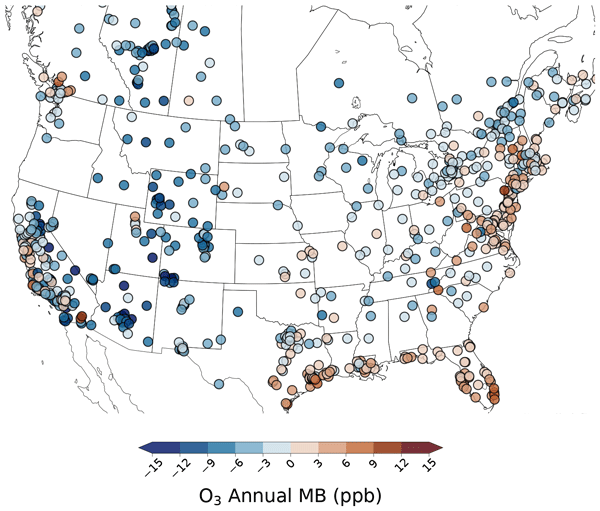
We present an evaluation of 6 annual runs made with the Regional Air Quality Deterministic Prediction System, an operational chemical weather forecast system for North America. Measurements used included NO2, O3, and PM2.5, 8 other gas-phase species, 7 PM2.5 species, and 3 ions in precipitation. Routine scores were augmented by many stratified analyses, and the results pointed to some model components where improvements are desirable. A companion paper provides a full description of the system.
Sina Voshtani, Dylan B. A. Jones, Debra Wunch, Drew C. Pendergrass, Paul O. Wennberg, David F. Pollard, Isamu Morino, Hirofumi Ohyama, Nicholas M. Deutscher, Frank Hase, Ralf Sussmann, Damien Weidmann, Rigel Kivi, Omaira García, Yao Té, Jack Chen, Kerry Anderson, Robin Stevens, Shobha Kondragunta, Aihua Zhu, Douglas Worthy, Senen Racki, Kathryn McKain, Maria V. Makarova, Nicholas Jones, Emmanuel Mahieu, Andrea Cadena-Caicedo, Paolo Cristofanelli, Casper Labuschagne, Elena Kozlova, Thomas Seitz, Martin Steinbacher, Reza Mahdi, and Isao Murata
Atmos. Chem. Phys., 25, 15527–15565, https://doi.org/10.5194/acp-25-15527-2025, https://doi.org/10.5194/acp-25-15527-2025, 2025
Short summary
Short summary
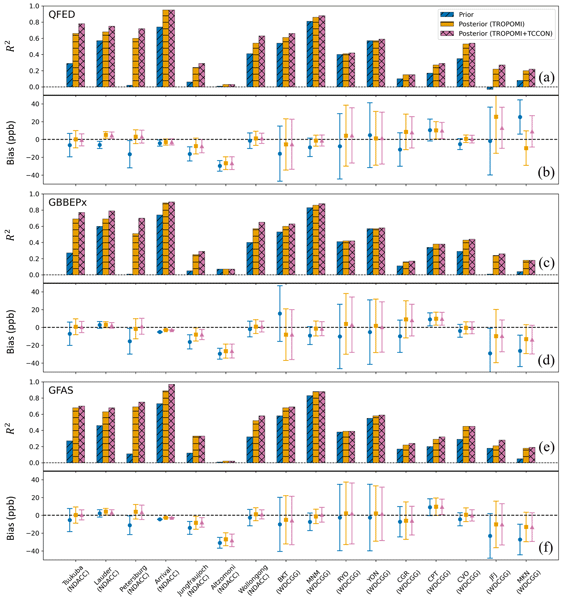
We assess the complementarity of the greater temporal coverage provided by ground-based remote sensing data with the spatial coverage of satellite observations when these data are used together to quantify CO emissions from extreme wildfires in 2023. Our results reveal that the commonly used biomass burning emission inventories significantly underestimate the fire emissions and emphasize the importance of the ground-based remote sensing data in reducing uncertainties in the estimated emissions.
Kerry Anderson, Jack Chen, Peter Englefield, Debora Griffin, Paul A. Makar, and Dan Thompson
Geosci. Model Dev., 17, 7713–7749, https://doi.org/10.5194/gmd-17-7713-2024, https://doi.org/10.5194/gmd-17-7713-2024, 2024
Short summary
Short summary
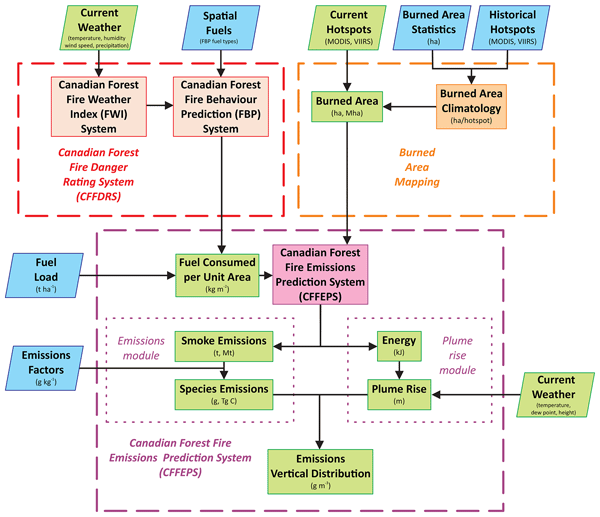
The Global Forest Fire Emissions Prediction System (GFFEPS) is a model that predicts smoke and carbon emissions from wildland fires. The model calculates emissions from the ground up based on satellite-detected fires, modelled weather and fire characteristics. Unlike other global models, GFFEPS uses daily weather conditions to capture changing burning conditions on a day-to-day basis. GFFEPS produced lower carbon emissions due to the changing weather not captured by the other models.
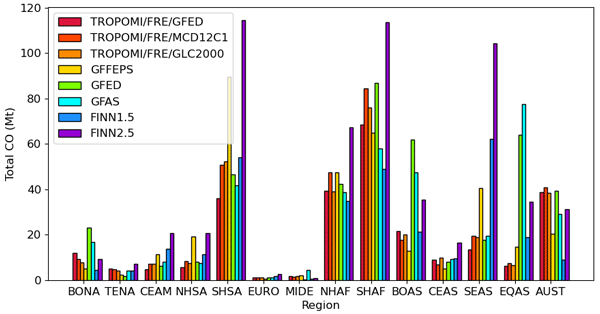
Debora Griffin, Jack Chen, Kerry Anderson, Paul Makar, Chris A. McLinden, Enrico Dammers, and Andre Fogal
Atmos. Chem. Phys., 24, 10159–10186, https://doi.org/10.5194/acp-24-10159-2024, https://doi.org/10.5194/acp-24-10159-2024, 2024
Short summary
Short summary
Satellite-derived CO emissions provide new insights into the understanding of global CO emission rates from wildfires. We use TROPOMI satellite data to create a global inventory database of wildfire CO emissions. These satellite-derived wildfire emissions are used for the evaluation and improvement of existing fire emission inventories and to examine how the wildfire CO emissions have changed over the past 2 decades.
Annika Vogel and Richard Ménard
Nonlin. Processes Geophys., 30, 375–398, https://doi.org/10.5194/npg-30-375-2023, https://doi.org/10.5194/npg-30-375-2023, 2023
Short summary
Short summary
Accurate estimation of the error statistics required for data assimilation remains an ongoing challenge, as statistical assumptions are required to solve the estimation problem. This work provides a conceptual view of the statistical error estimation problem in light of the increasing number of available datasets. We found that the total number of required assumptions increases with the number of overlapping datasets, but the relative number of error statistics that can be estimated increases.
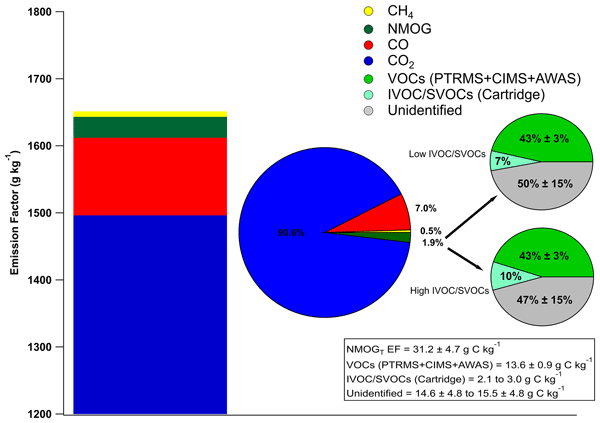
Katherine L. Hayden, Shao-Meng Li, John Liggio, Michael J. Wheeler, Jeremy J. B. Wentzell, Amy Leithead, Peter Brickell, Richard L. Mittermeier, Zachary Oldham, Cristian M. Mihele, Ralf M. Staebler, Samar G. Moussa, Andrea Darlington, Mengistu Wolde, Daniel Thompson, Jack Chen, Debora Griffin, Ellen Eckert, Jenna C. Ditto, Megan He, and Drew R. Gentner
Atmos. Chem. Phys., 22, 12493–12523, https://doi.org/10.5194/acp-22-12493-2022, https://doi.org/10.5194/acp-22-12493-2022, 2022
Short summary
Short summary
In this study, airborne measurements provided the most detailed characterization, to date, of boreal forest wildfire emissions. Measurements showed a large diversity of air pollutants expanding the volatility range typically reported. A large portion of organic species was unidentified, likely comprised of complex organic compounds. Aircraft-derived emissions improve wildfire chemical speciation and can support reliable model predictions of pollution from boreal forest wildfires.
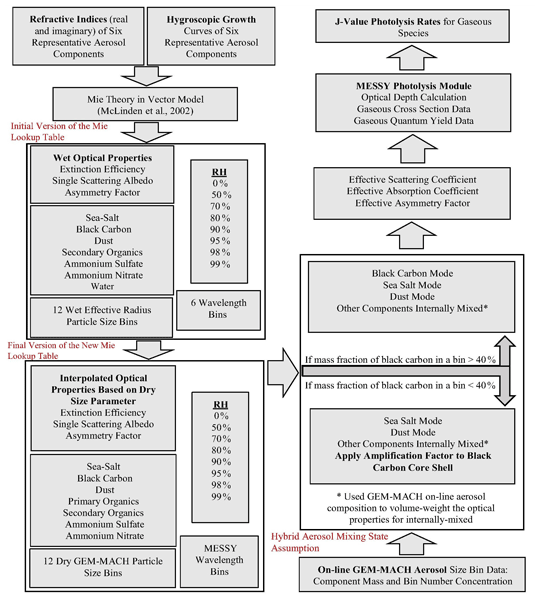
Mahtab Majdzadeh, Craig A. Stroud, Christopher Sioris, Paul A. Makar, Ayodeji Akingunola, Chris McLinden, Xiaoyi Zhao, Michael D. Moran, Ihab Abboud, and Jack Chen
Geosci. Model Dev., 15, 219–249, https://doi.org/10.5194/gmd-15-219-2022, https://doi.org/10.5194/gmd-15-219-2022, 2022
Short summary
Short summary
A new lookup table for aerosol optical properties based on a Mie scattering code was calculated and adopted within an improved version of the photolysis module in the GEM-MACH in-line chemical transport model. The modified version of the photolysis module makes use of online interactive aerosol feedback and applies core-shell parameterizations to the black carbon absorption efficiency based on Bond et al. (2006) to the size bins with black carbon mass fraction of less than 40 %.
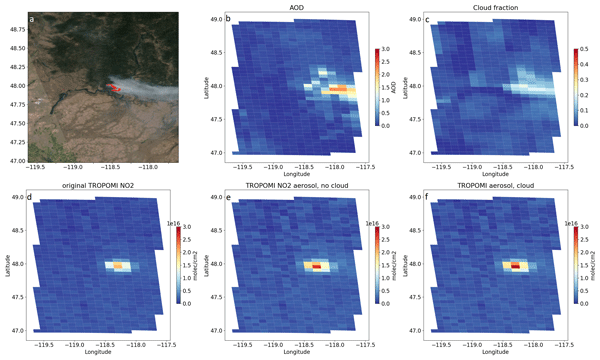
Debora Griffin, Chris A. McLinden, Enrico Dammers, Cristen Adams, Chelsea E. Stockwell, Carsten Warneke, Ilann Bourgeois, Jeff Peischl, Thomas B. Ryerson, Kyle J. Zarzana, Jake P. Rowe, Rainer Volkamer, Christoph Knote, Natalie Kille, Theodore K. Koenig, Christopher F. Lee, Drew Rollins, Pamela S. Rickly, Jack Chen, Lukas Fehr, Adam Bourassa, Doug Degenstein, Katherine Hayden, Cristian Mihele, Sumi N. Wren, John Liggio, Ayodeji Akingunola, and Paul Makar
Atmos. Meas. Tech., 14, 7929–7957, https://doi.org/10.5194/amt-14-7929-2021, https://doi.org/10.5194/amt-14-7929-2021, 2021
Short summary
Short summary
Satellite-derived NOx emissions from biomass burning are estimated with TROPOMI observations. Two common emission estimation methods are applied, and sensitivity tests with model output were performed to determine the accuracy of these methods. The effect of smoke aerosols on TROPOMI NO2 columns is estimated and compared to aircraft observations from four different aircraft campaigns measuring biomass burning plumes in 2018 and 2019 in North America.
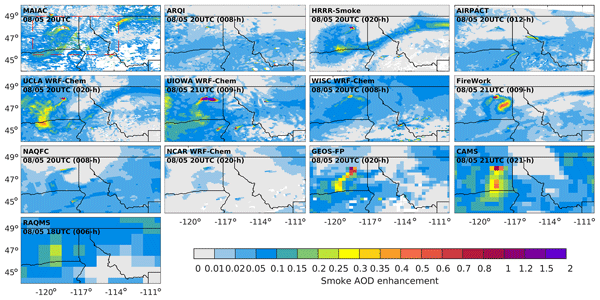
Xinxin Ye, Pargoal Arab, Ravan Ahmadov, Eric James, Georg A. Grell, Bradley Pierce, Aditya Kumar, Paul Makar, Jack Chen, Didier Davignon, Greg R. Carmichael, Gonzalo Ferrada, Jeff McQueen, Jianping Huang, Rajesh Kumar, Louisa Emmons, Farren L. Herron-Thorpe, Mark Parrington, Richard Engelen, Vincent-Henri Peuch, Arlindo da Silva, Amber Soja, Emily Gargulinski, Elizabeth Wiggins, Johnathan W. Hair, Marta Fenn, Taylor Shingler, Shobha Kondragunta, Alexei Lyapustin, Yujie Wang, Brent Holben, David M. Giles, and Pablo E. Saide
Atmos. Chem. Phys., 21, 14427–14469, https://doi.org/10.5194/acp-21-14427-2021, https://doi.org/10.5194/acp-21-14427-2021, 2021
Short summary
Short summary
Wildfire smoke has crucial impacts on air quality, while uncertainties in the numerical forecasts remain significant. We present an evaluation of 12 real-time forecasting systems. Comparison of predicted smoke emissions suggests a large spread in magnitudes, with temporal patterns deviating from satellite detections. The performance for AOD and surface PM2.5 and their discrepancies highlighted the role of accurately represented spatiotemporal emission profiles in improving smoke forecasts.
Annika Vogel and Hendrik Elbern
Geosci. Model Dev., 14, 5583–5605, https://doi.org/10.5194/gmd-14-5583-2021, https://doi.org/10.5194/gmd-14-5583-2021, 2021
Short summary
Short summary
While atmospheric chemical forecasts rely on uncertain model parameters, their huge dimensions hamper an efficient uncertainty estimation. This study presents a novel approach to efficiently sample these uncertainties by extracting dominant dependencies and correlations. Applying the algorithm to biogenic emissions, their uncertainties can be estimated from a low number of dominant components. This states the capability of an efficient treatment of parameter uncertainties in atmospheric models.

Paul A. Makar, Ayodeji Akingunola, Jack Chen, Balbir Pabla, Wanmin Gong, Craig Stroud, Christopher Sioris, Kerry Anderson, Philip Cheung, Junhua Zhang, and Jason Milbrandt
Atmos. Chem. Phys., 21, 10557–10587, https://doi.org/10.5194/acp-21-10557-2021, https://doi.org/10.5194/acp-21-10557-2021, 2021
Short summary
Short summary
We have examined the effects of airborne particles on absorption and scattering of incoming sunlight by the particles themselves via cloud formation. We used an advanced, combined high-resolution weather forecast and chemical transport computer model, for western North America, and simulations with and without the connections between particles and weather enabled. Feedbacks improved weather and air pollution forecasts and changed cloud behaviour and forest-fire pollutant amount and height.
Cited articles
Anderson, K., Chen, J., Englefield, P., Griffin, D., Makar, P. A., and Thompson, D.: The Global Forest Fire Emissions Prediction System version 1.0, Geosci. Model Dev., 17, 7713–7749, https://doi.org/10.5194/gmd-17-7713-2024, 2024. a
Brecht, R. and Bihlo, A.: Computing the Ensemble Spread From Deterministic Weather Predictions Using Conditional Generative Adversarial Networks, Geophysical Research Letters, 50, e2022GL101452, https://doi.org/10.1029/2022GL101452, 2023. a
Buehner, M., McTaggart-Cowan, R., Beaulne, A., Charette, C., Garand, L., Heilliette, S., Lapalme, E., Laroche, S., Macpherson, S. R., Morneau, J., and Zadra, A.: Implementation of Deterministic Weather Forecasting Systems Based on Ensemble–Variational Data Assimilation at Environment Canada. Part I: The Global System, Mon. Weather Rev., 143, 2532–2559, https://doi.org/10.1175/MWR-D-14-00354.1, 2015. a
Byrne, B., Liu, J., Bowman, K., Pascolini-Campbell, M., Chatterjee, A., Pandey, S., Miyazaki, K., van der Werf, G., Wunch, D., Wennberg, P., Roehl, C., and Sinha, S.: Carbon emissions from the 2023 Canadian wildfires, Nature, 633, 835–839, https://doi.org/10.1038/s41586-024-07878-z, 2024. a
Chen, H., Kaufman, J. S., Chen, C., Wang, J., Maier, A., van Dijk, A., Slipp, N., Rana, J., MacIntyre, E., Su, Y., Kim, J., and Benmarhnia, T.: Impact of the 2023 wildfire smoke episodes in Ontario, Canada, on asthma and other health outcomes: an interrupted time-series analysis, CMAJ, 197, E465–E477, https://doi.org/10.1503/cmaj.241506, 2025. a
Chen, J., Anderson, K., Pavlovic, R., Moran, M. D., Englefield, P., Thompson, D. K., Munoz-Alpizar, R., and Landry, H.: The FireWork v2.0 air quality forecast system with biomass burning emissions from the Canadian Forest Fire Emissions Prediction System v2.03, Geosci. Model Dev., 12, 3283–3310, https://doi.org/10.5194/gmd-12-3283-2019, 2019. a, b
Cohn, S. E.: Dynamics of Short-Term Univariate Forecast Error Covariances, Mon. Weather Rev., 121, 3123–3149, https://doi.org/10.1175/1520-0493(1993)121<3123:DOSTUF>2.0.CO;2, 1993. a
Colette, A., Collin, G., Besson, F., Blot, E., Guidard, V., Meleux, F., Royer, A., Petiot, V., Miller, C., Fermond, O., Jeant, A., Adani, M., Arteta, J., Benedictow, A., Bergström, R., Bowdalo, D., Brandt, J., Briganti, G., Carvalho, A. C., Christensen, J. H., Couvidat, F., D'Elia, I., D'Isidoro, M., Denier van der Gon, H., Descombes, G., Di Tomaso, E., Douros, J., Escribano, J., Eskes, H., Fagerli, H., Fatahi, Y., Flemming, J., Friese, E., Frohn, L., Gauss, M., Geels, C., Guarnieri, G., Guevara, M., Guion, A., Guth, J., Hänninen, R., Hansen, K., Im, U., Janssen, R., Jeoffrion, M., Joly, M., Jones, L., Jorba, O., Kadantsev, E., Kahnert, M., Kaminski, J. W., Kouznetsov, R., Kranenburg, R., Kuenen, J., Lange, A. C., Langner, J., Lannuque, V., Macchia, F., Manders, A., Mircea, M., Nyiri, A., Olid, M., Pérez García-Pando, C., Palamarchuk, Y., Piersanti, A., Raux, B., Razinger, M., Robertson, L., Segers, A., Schaap, M., Siljamo, P., Simpson, D., Sofiev, M., Stangel, A., Struzewska, J., Tena, C., Timmermans, R., Tsikerdekis, T., Tsyro, S., Tyuryakov, S., Ung, A., Uppstu, A., Valdebenito, A., van Velthoven, P., Vitali, L., Ye, Z., Peuch, V.-H., and Rouïl, L.: Copernicus Atmosphere Monitoring Service – Regional Air Quality Production System v1.0, Geosci. Model Dev., 18, 6835–6883, https://doi.org/10.5194/gmd-18-6835-2025, 2025. a
ECCC: The Regional Air Quality Deterministic Prediction System (RAQDPS) of the Meteorological Service of Canada, Technical Specifications, https://collaboration.cmc.ec.gc.ca/cmc/CMOI/product_guide/docs/tech_notes/technote_raqdps_e.pdf (last access: 17 April 2026), 2024a. a
ECCC: The Global Deterministic Prediction System G0 (GDPS) of the Meteorological Service of Canada, Technical Specifications, https://collaboration.cmc.ec.gc.ca/cmc/CMOI/product_guide/docs/tech_notes/technote_gdsps_e.pdf (last access: 17 April 2026), 2024b. a
Environment and Canada, C. C.: GEM-MACHv3.2.1.1_firePKF, Zenodo [code], https://doi.org/10.5281/zenodo.18306098, 2026. a
Epstein, E. S.: Stochastic dynamic prediction, Tellus, 21, 739–759, https://doi.org/10.1111/j.2153-3490.1969.tb00483.x, 1969. a
Eskes, H. J., Velthoven, P. F. J. V., Valks, P. J. M., and Kelder, H. M.: Assimilation of GOME total-ozone satellite observations in a three-dimensional tracer-transport model, Q. J. Roy. Meteor. Soc., 129, 1663–1681, https://doi.org/10.1256/qj.02.14, 2003. a
Flood, V. A., Strong, K., Whaley, C. H., Chen, J., Wunch, D., Drummond, J. R., Colebatch, O., Gillespie, L., and Mostafavi Pak, N.: The Impact of the 2023 Canadian Forest Fires on Air Quality in Southern Ontario, J. Geophys. Res.-Atmos., 130, e2024JD042254, https://doi.org/10.1029/2024JD042254,2025. a
Gaspari, G. and Cohn, S. E.: Construction of correlation functions in two and three dimensions, Q. J. Roy. Meteor. Soc., 125, 723–757, https://doi.org/10.1002/qj.49712555417, 1999. a
Gilpin, S.: Inaccuracy of Ensemble-Based Covariance Propagation, Beyond Sampling Error, Tellus, https://doi.org/10.16993/tellus.4119, 2026. a
Gilpin, S., Matsuo, T., and Cohn, S. E.: Inaccuracy of the variance evolution associated with discrete covariance propagation, Q. J. Roy. Meteor. Soc., e5016, https://doi.org/10.1002/qj.5016, 2025. a
Griffin, D., Sioris, C., Chen, J., Dickson, N., Kovachik, A., de Graaf, M., Nanda, S., Veefkind, P., Dammers, E., McLinden, C. A., Makar, P., and Akingunola, A.: The 2018 fire season in North America as seen by TROPOMI: aerosol layer height intercomparisons and evaluation of model-derived plume heights, Atmos. Meas. Tech., 13, 1427–1445, https://doi.org/10.5194/amt-13-1427-2020, 2020. a, b
Henderson, S. B.: Wildfire smoke air pollution: new approaches needed to protect people affected, CMAJ, 197, E483–E484, https://doi.org/10.1503/cmaj.250510, 2025. a
Jain, P., Barber, Q. E., Taylor, S. W., Whitman, E., Castellanos Acuna, D., Boulanger, Y., Chavardès, R. D., Chen, J., Englefield, P., Flannigan, M., Girardin, M. P., Hanes, C. C., Little, J., Morrison, K., Skakun, R. S., Thompson, D. K., Wang, X., and Parisien, M.-A.: Drivers and impacts of the record-breaking 2023 wildfire season in Canada, Nat. Commun., 15, 6764, https://doi.org/10.1038/s41467-024-51154-7, 2024. a
Kaiser, J. W., Heil, A., Andreae, M. O., Benedetti, A., Chubarova, N., Jones, L., Morcrette, J.-J., Razinger, M., Schultz, M. G., Suttie, M., and van der Werf, G. R.: Biomass burning emissions estimated with a global fire assimilation system based on observed fire radiative power, Biogeosciences, 9, 527–554, https://doi.org/10.5194/bg-9-527-2012, 2012. a
Ke, Z., Wang, Y., Zou, Y., Song, Y., and Liu, Y.: Global Wildfire Plume-Rise Data Set and Parameterizations for Climate Model Applications, J. Geophys. Res.-Atmos., 126, e2020JD033085, https://doi.org/10.1029/2020JD033085, 2021. a
Khattatov, B. V., Lamarque, J.-F., Lyjak, L. V., Menard, R., Levelt, P., Tie, X., Brasseur, G. P., and Gille, J. C.: Assimilation of satellite observations of long-lived chemical species in global chemistry transport models, J. Geophys. Res.-Atmos., 105, 29135–29144, https://doi.org/10.1029/2000JD900466, 2000. a
Kong, L., Tang, X., Zhu, J., Wang, Z., Li, J., Wu, H., Wu, Q., Chen, H., Zhu, L., Wang, W., Liu, B., Wang, Q., Chen, D., Pan, Y., Song, T., Li, F., Zheng, H., Jia, G., Lu, M., Wu, L., and Carmichael, G. R.: A 6-year-long (2013–2018) high-resolution air quality reanalysis dataset in China based on the assimilation of surface observations from CNEMC, Earth Syst. Sci. Data, 13, 529–570, https://doi.org/10.5194/essd-13-529-2021, 2021. a
Leutbecher, M.: Ensemble size: How suboptimal is less than infinity?, Q. J. Roy. Meteor. Soc., 145, 107–128, 2019. a
Li, L., Carver, R., Lopez-Gomez, I., Sha, F., and Anderson, J.: Generative emulation of weather forecast ensembles with diffusion models, Sci. Adv., 10, eadk4489, https://doi.org/10.1126/sciadv.adk4489, 2024. a
Ménard, R., Cossette, J.-F., and Deshaies-Jacques, M.: On the Complementary Role of Data Assimilation and Machine Learning: An Example Derived from Air Quality Analysis, in: Computational Science – ICCS 2020, edited by: Krzhizhanovskaya, V. V., Závodszky, G., Lees, M. H., Dongarra, J. J., Sloot, P. M. A., Brissos, S., and Teixeira, J., Springer International Publishing, Cham, 212–224, ISBN 978-3-030-50433-5, 2020. a
Moran, M. D., Lupu, A., Savic-Jovcic, V., Zhang, J., Zheng, Q., Boutzis, E. I., Mashayekhi, R., Stroud, C. A., Ménard, S., Chen, J., Menelaou, K., Munoz-Alpizar, R., Kornic, D., and Manseau, P. M.: Operational chemical weather forecasting with the ECCC online Regional Air Quality Deterministic Prediction System version 023 (RAQDPS023) – Part 2: Multi-year prospective and retrospective performance evaluation, Geosci. Model Dev., 19, 4205–4270, https://doi.org/10.5194/gmd-19-4205-2026, 2026a. a
Moran, M. D., Savic-Jovcic, V., Stroud, C. A., Ménard, S., Gong, W., Zhang, J., Zheng, Q., Chen, J., Akingunola, A., Lupu, A., Menelaou, K., and Munoz-Alpizar, R.: Operational chemical weather forecasting with the ECCC online Regional Air Quality Deterministic Prediction System version 023 (RAQDPS023) – Part 1: system description, Geosci. Model Dev., 19, 4137–4203, https://doi.org/10.5194/gmd-19-4137-2026, 2026b. a
Ménard, R. and Chang, L.-P.: Assimilation of Stratospheric Chemical Tracer Observations Using a Kalman Filter. Part I: Formulation, Mon. Weather Rev., 128, 2672–2686, https://doi.org/10.1175/1520-0493(2000)128<2672:AOSCTO>2.0.CO;2, 2000. a
Ménard, R. and Deshaies-Jacques, M.: Evaluation of Analysis by Cross-Validation. Part I: Using Verification Metrics, Atmosphere, 9, https://doi.org/10.3390/atmos9030086, 2018a. a
Ménard, R. and Deshaies-Jacques, M.: Evaluation of Analysis by Cross-Validation, Part II: Diagnostic and Optimization of Analysis Error Covariance, Atmosphere, 9, https://doi.org/10.3390/atmos9020070, 2018b. a
Ménard, R., Skachko, S., and Pannekoucke, O.: Numerical discretization causing error variance loss and the need for inflation, Q. J. Roy. Meteor. Soc., 147, 3498–3520, https://doi.org/10.1002/qj.4139, 2021. a
Pannekoucke, O., Ricci, S., Barthelemy, S., Ménard, R., and Thual, O.: Parametric Kalman filter for chemical transport models, Tellus A, 68, 31547, https://doi.org/10.3402/tellusa.v68.31547, 2016. a, b
Pannekoucke, O., Ménard, R., El Aabaribaoune, M., and Plu, M.: A methodology to obtain model-error covariances due to the discretization scheme from the parametric Kalman filter perspective, Nonlin. Processes Geophys., 28, 1–22, https://doi.org/10.5194/npg-28-1-2021, 2021. a
Park, S.-Y., Dash, U. K., Yu, J., Yumimoto, K., Uno, I., and Song, C. H.: Implementation of an ensemble Kalman filter in the Community Multiscale Air Quality model (CMAQ model v5.1) for data assimilation of ground-level PM2.5, Geosci. Model Dev., 15, 2773–2790, https://doi.org/10.5194/gmd-15-2773-2022, 2022. a, b
Pendergrass, D. C., Jacob, D. J., Nesser, H., Varon, D. J., Sulprizio, M., Miyazaki, K., and Bowman, K. W.: CHEEREIO 1.0: a versatile and user-friendly ensemble-based chemical data assimilation and emissions inversion platform for the GEOS-Chem chemical transport model, Geosci. Model Dev., 16, 4793–4810, https://doi.org/10.5194/gmd-16-4793-2023, 2023. a
Perrot, A., Pannekoucke, O., and Guidard, V.: Toward a multivariate formulation of the parametric Kalman filter assimilation: application to a simplified chemical transport model, Nonlin. Processes Geophys., 30, 139–166, https://doi.org/10.5194/npg-30-139-2023, 2023. a, b, c
Rochoux, M., Delmotte, B., Cuenot, B., Ricci, S., and Trouvé, A.: Regional-scale simulations of wildland fire spread informed by real-time flame front observations, P. Combust. Inst., 34, 2641–2647, https://doi.org/10.1016/j.proci.2012.06.090, 2013. a
Rochoux, M. C., Emery, C., Ricci, S., Cuenot, B., and Trouvé, A.: Towards predictive data-driven simulations of wildfire spread – Part II: Ensemble Kalman Filter for the state estimation of a front-tracking simulator of wildfire spread, Nat. Hazards Earth Syst. Sci., 15, 1721–1739, https://doi.org/10.5194/nhess-15-1721-2015, 2015. a
Sabathier, M., Pannekoucke, O., Maget, V., and Dahmen, N.: Boundary Conditions for the Parametric Kalman Filter Forecast, J. Adv. Model. Earth Sy., 15, e2022MS003462, https://doi.org/10.1029/2022MS003462, 2023. a
Sacco, M. A., Ruiz, J. J., Pulido, M., and Tandeo, P.: Evaluation of machine learning techniques for forecast uncertainty quantification, Q. J. Roy. Meteor. Soc., 148, 3470–3490, https://doi.org/10.1002/qj.4362, 2022. a
Sitwell, M.: EnsAI: An Emulator for Atmospheric Chemical Ensembles, arXiv [preprint], https://doi.org/10.48550/arXiv.2504.16024, 2025. a
Srivas, T., de Callafon, R. A., Crawl, D., and Altintas, I.: Data Assimilation of Wildfires with Fuel Adjustment Factors in farsite using Ensemble Kalman Filtering, Procedia Comput. Sci., 108, 1572–1581, https://doi.org/10.1016/j.procs.2017.05.197, 2017. a
Sun, W., Liu, Z., Chen, D., Zhao, P., and Chen, M.: Development and application of the WRFDA-Chem three-dimensional variational (3DVAR) system: aiming to improve air quality forecasting and diagnose model deficiencies, Atmos. Chem. Phys., 20, 9311–9329, https://doi.org/10.5194/acp-20-9311-2020, 2020. a
Tilmes, S., Emmons, L. K., Buchholz, R. R., and The CESM2 Development Team: CESM2.2 CAM-chem as Boundary Conditions, https://doi.org/10.5065/XS0R-QE86, 2022. a
Vogel, A. and Elbern, H.: Identifying forecast uncertainties for biogenic gases in the Po Valley related to model configuration in EURAD-IM during PEGASOS 2012, Atmos. Chem. Phys., 21, 4039–4057, https://doi.org/10.5194/acp-21-4039-2021, 2021a. a
Vogel, A. and Elbern, H.: Efficient ensemble generation for uncertain correlated parameters in atmospheric chemical models: a case study for biogenic emissions from EURAD-IM version 5, Geosci. Model Dev., 14, 5583–5605, https://doi.org/10.5194/gmd-14-5583-2021, 2021b. a
Vogel, A., Ménard, R., and Chen, J.: Dispersion Dynamics of Wildfire Aerosol for Prognostic Error Variance Evolution and Improved Assimilation, in: Air Pollution Modeling and Its Application XXX, edited by: Mensink, C. and Im, U., Springer Nature Switzerland, Cham, 441–449, ISBN 978-3-032-02971-3, https://doi.org/10.1007/978-3-032-02971-3_55, 2026a. a, b, c
Vogel, A., Ménard, R., Abu, J., and Chen, J.: Output of GEM-MACHv3.2.1.1_firePKF and OAv2 suite: Parametric uncertainty forecasts for wildfire case study on 6 June 2023, Zenodo [data set], https://doi.org/10.5281/zenodo.21298068, 2026b. a
Voshtani, S., Ménard, R., Walker, T. W., and Hakami, A.: Assimilation of GOSAT Methane in the Hemispheric CMAQ; Part I: Design of the Assimilation System, Remote Sens., 14, https://doi.org/10.3390/rs14020371, 2022. a, b
Wang, H., Martin, C., Barré, J., Li, R., Weygandt, S., Huang, J., Tang, Y., Choi, H., Tangborn, A., Wang, K., Liu, H., and Lee, J.: PM2.5 assimilation within JEDI for NOAA's regional Air Quality Model (AQMv7): application to the September 2020 Western US wildfires, Geosci. Model Dev., 19, 2479–2495, https://doi.org/10.5194/gmd-19-2479-2026, 2026. a
Wang, Z., Wang, Z., Zou, Z., Chen, X., Wu, H., Wang, W., Su, H., Li, F., Xu, W., Liu, Z., and Zhu, J.: Severe Global Environmental Issues Caused by Canada's Record-Breaking Wildfires in 2023, Adv. Atmos. Sci., 41, 565–571, 2024. a
Wu, T., Zhang, Q., Zhu, J., Wu, J., Dai, J., and Zhang, Y.: Dynamic Correction of Forest Fire Spread Prediction using Observation Error Covariance Matrix Estimation Technique based on FLC-GRU, Fire Ecol., 20, https://doi.org/10.21203/rs.3.rs-3972535/v1, 2024. a
Zhang, Q., Wang, Y., Xiao, Q., Geng, G., Davis, S. J., Liu, X., Yang, J., Liu, J., Huang, W., He, C., Luo, B., Martin, R. V., Brauer, M., Randerson, J. T., and He, K.: Long-range PM2.5 pollution and health impacts from the 2023 Canadian wildfires, Nature, 645, 672–678, https://doi.org/10.1038/s41586-025-09482-1, 2025. a
Zhou, T., Ding, L., Ji, J., and Luo, S.: VWETKF for wildfire propagation prediction employing observations with missing values and/or spatial variations of error variance, P. Combust. Inst., 38, 5091–5099, https://doi.org/10.1016/j.proci.2020.05.028, 2021. a
Short summary
Recent wildfire activity in Canada has been rising the public demand for fast, yet accurate operational air quality forecasts along with related forecast uncertainties. This study explores the potential of an efficient process-based approach to estimate forecast uncertainties of operational air quality models. Our results show its potential for understanding how uncertainties of operational forecast evolve over time and an improved use of sparse observation signals at remote wildfire regions.
Recent wildfire activity in Canada has been rising the public demand for fast, yet accurate...


