Articles | Volume 33, issue 1
https://doi.org/10.5194/npg-33-51-2026
© Author(s) 2026. This work is distributed under
the Creative Commons Attribution 4.0 License.
https://doi.org/10.5194/npg-33-51-2026
© Author(s) 2026. This work is distributed under
the Creative Commons Attribution 4.0 License.
On transversality and the characterization of finite time hyperbolic subspaces in chaotic attractors

Terence J. O'Kane
CORRESPONDING AUTHOR
CSIRO Oceans and Atmosphere, Battery Point, Hobart, Tasmania, Australia
University of Tasmania, Sandy Bay, Hobart, Tasmania, Australia
Courtney R. Quinn
University of Tasmania, Sandy Bay, Hobart, Tasmania, Australia
CSIRO Oceans and Atmosphere, Battery Point, Hobart, Tasmania, Australia
Related authors
Mark Collier, Dylan Harries, and Terence O'Kane
EGUsphere, https://doi.org/10.5194/egusphere-2025-3948, https://doi.org/10.5194/egusphere-2025-3948, 2025
Short summary
Short summary
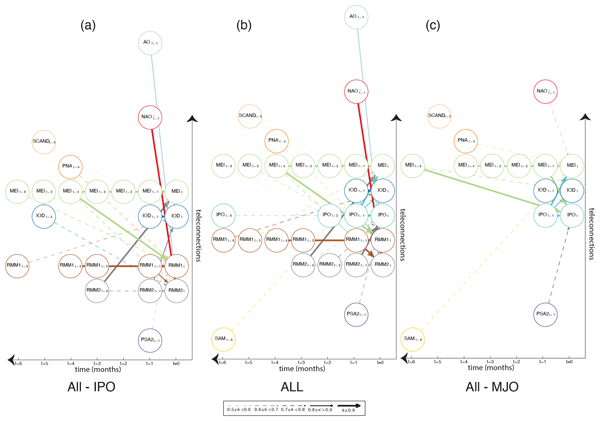
Here we apply Bayesian methods to reconstructed and simulated climate model data over past decades to determine the role of long timescale phase dependencies, and extratropical teleconnections, on the major drivers of tropical climate variability.
Serena Schroeter, Terence J. O'Kane, and Paul A. Sandery
The Cryosphere, 17, 701–717, https://doi.org/10.5194/tc-17-701-2023, https://doi.org/10.5194/tc-17-701-2023, 2023
Short summary
Short summary
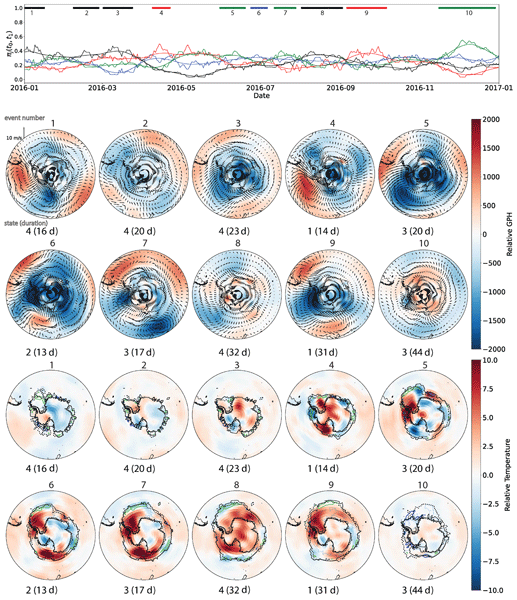
Antarctic sea ice has increased over much of the satellite record, but we show that the early, strongly opposing regional trends diminish and reverse over time, leading to overall negative trends in recent decades. The dominant pattern of atmospheric flow has changed from strongly east–west to more wave-like with enhanced north–south winds. Sea surface temperatures have also changed from circumpolar cooling to regional warming, suggesting recent record low sea ice will not rapidly recover.
John Reilly, Chris Chapman, Courtney Quinn, Jules Kajtar, Ashley Barnes, and Neil Holbrook
EGUsphere, https://doi.org/10.5194/egusphere-2025-4226, https://doi.org/10.5194/egusphere-2025-4226, 2025
Short summary
Short summary
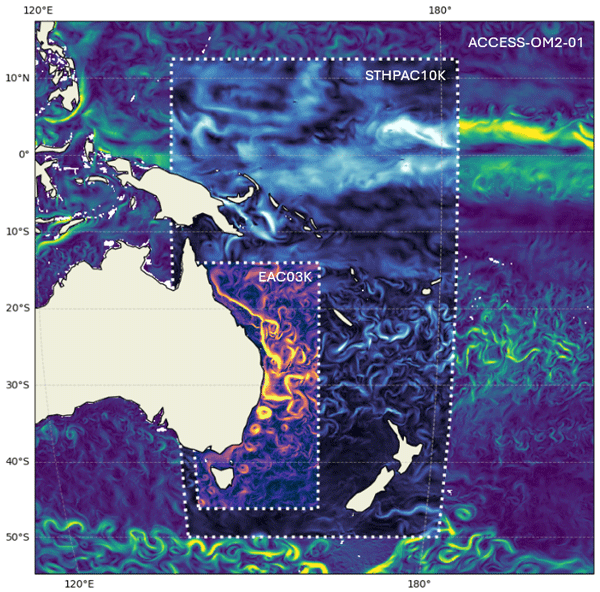
Recent advancements in regional ocean modelling allow higher resolution simulations providing improved estimates of the large-scale ocean state, while also revealing new insights into the fine-scale processes connecting the open ocean to the continental shelf seas. Our study highlights the importance of increased model resolution in regions of the ocean that are particularly turbulent while in quasi-stable circulation regions (e.g., jets), the current state-of-the-art global models do suffice.
Mark Collier, Dylan Harries, and Terence O'Kane
EGUsphere, https://doi.org/10.5194/egusphere-2025-3948, https://doi.org/10.5194/egusphere-2025-3948, 2025
Short summary
Short summary
Here we apply Bayesian methods to reconstructed and simulated climate model data over past decades to determine the role of long timescale phase dependencies, and extratropical teleconnections, on the major drivers of tropical climate variability.
Samuel Watson and Courtney Quinn
Nonlin. Processes Geophys., 31, 381–394, https://doi.org/10.5194/npg-31-381-2024, https://doi.org/10.5194/npg-31-381-2024, 2024
Short summary
Short summary
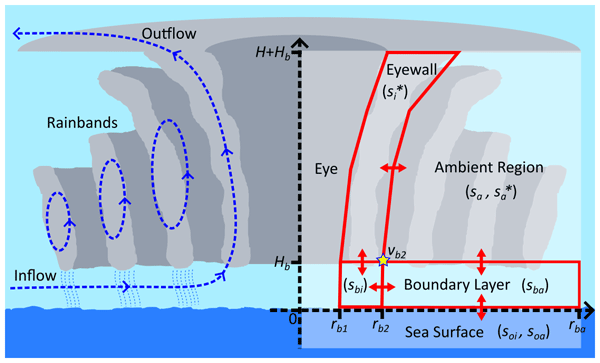
The intensification of tropical cyclones (TCs) is explored through a conceptual model derived from geophysical principals. Focus is put on the behaviour of the model with parameters which change in time. The rates of change cause the model to either tip to an alternative stable state or recover the original state. This represents intensification, dissipation, or eyewall replacement cycles (ERCs). A case study which emulates the rapid intensification events of Hurricane Irma (2017) is explored.
Serena Schroeter, Terence J. O'Kane, and Paul A. Sandery
The Cryosphere, 17, 701–717, https://doi.org/10.5194/tc-17-701-2023, https://doi.org/10.5194/tc-17-701-2023, 2023
Short summary
Short summary
Antarctic sea ice has increased over much of the satellite record, but we show that the early, strongly opposing regional trends diminish and reverse over time, leading to overall negative trends in recent decades. The dominant pattern of atmospheric flow has changed from strongly east–west to more wave-like with enhanced north–south winds. Sea surface temperatures have also changed from circumpolar cooling to regional warming, suggesting recent record low sea ice will not rapidly recover.
Cited articles
Arbanel, H. D., Brown, R., and Kennel, M. B.: Variation of Lyapunov exponents on a strange attractor, J. Nonlin. Sci., 175–199, https://doi.org/10.1007/BF01209065, 1991. a
Ayers, D., Lau, J., Amezcua, J., Carrassi, A., and Ojha, V.: Supervised machine learning to estimate instabilitiesin chaotic systems: Estimation of local Lyapunov exponents, Q. J. Roy. Meteorol. Soc., 1236–1262, https://doi.org/10.1002/qj.4450, 2023. a
Beims, M. W. and Gallas, J. A. C.: Alignment of Lyapunov Vectors: a quantitative criterion to predict catastrophes?, Sci. Rep., 6, 1–7, https://doi.org/10.1038/srep37102, 2016. a
Bochi, J. and Viana, M.: How frequently are dynamical systems hyperbolic?, Modern Dynam. Syst. Appl., A19, 271–297, 2004. a
Bocquet, M. and Carrassi, A.: Four-dimensional ensemble variational data assimilation and the unstable subspace, Tellus A, 69, 1304504, https://doi.org/10.1080/16000870.2017.1304504, 2017. a
Buizza, R., Tribbia, J., Molteni, F., and Palmer, T.: Computation of optimal unstable structures for a numerical weather prediction model, Tellus A, 45, 388–407, https://doi.org/10.3402/tellusa.v45i5.14901, 1993. a
Crane, D. L., Davidchack, R. L., and Gorban, A. N.: Minimal cover of high-dimensional chaotic attractors by embedded recurrent patterns, Commun. Nonlin. Sci. Numer. Simul., 140, 108345, https://doi.org/10.1016/j.cnsns.2024.108345, 2025. a
Dieci, L., Russell, R. D., and Vleck, E. S. V.: On the compuation of Lyapunov exponents for continuous dynamical systems, SIAM J. Numer. Anal., 34, 402–423, https://doi.org/10.1137/S0036142993247311, 1997. a
Dieci, L., Jolly, M., and Vleck, E.: Numerical Techniques for Approximating Lyapunov Exponents and Their Implementation, J. Comput. Nonlin. Dynam., 6, https://doi.org/10.1115/1.4002088, 2011. a
Ding, R. and Li, J.: Nonlinear finite-time Lyapunov exponent and predictability, Phys. Lett. A, 364, 396–400, https://doi.org/10.1016/j.physleta.2006.11.094, 2007. a
Dong, C., Faranda, D., Gualandi, A., Lucarini, V., and Mengaldo, G.: Time-lagged recurrence: A data-driven method to estimate the predictability of dynamical systems, P. Natl. Acad. Sci. USA, 122, e2420252122, https://doi.org/10.1073/pnas.2420252122, 2025. a
Eckhardt, B. and Yao, D.: Local Lyapunov exponents in chaotic systems, Nonlin. Phenom., 65, 100–108, https://doi.org/10.1016/0167-2789(93)90007-N, 1993. a
Essex, C., Lookman, T., and Nerenberg, M. A. H.: The climate attractor over short timescales, Nature, 326, 64–66, https://doi.org/10.1038/326064a0, 1987. a
Fouxon, I., Feinberg, J., Käpylä, P., and Mond, M.: Reynolds number dependence of Lyapunov exponents of turbulence and fluid particles, Phys. Rev. E, 103, 03310, https://doi.org/10.1103/PhysRevE.103.033110, 2021. a
Fraedrich, F.: Estimating the Dimensions of Weather and Climate Attractorsy, J. Atmos. Sci., 43, 419–432, https://doi.org/10.1175/1520-0469(1986)043<0419:ETDOWA>2.0.CO;2, 1986. a, b, c
Frederickson, P., Kaplan, J. L., Yorke, E. D., and Yorke, J. A.: The Liapunov dimension of strange attractors, J. Different. Equat., 49, 185–207, https://doi.org/10.1016/0022-0396(83)90011-6, 1983. a
Frederiksen, J. S.: A unified three-dimensional instability theory of the onset of blocking and cyclogenesis, J. Atmos. Sci., 39, 969–982, https://doi.org/10.1175/1520-0469(1982)039<0969:AUTDIT>2.0.CO;2, 1982. a
Frederiksen, J. S.: A unified three-dimensional instability theory of the onset of blocking and cyclogenesis. II. Teleconnection patterns, J. Atmos. Sci., 40, 2593–2609, https://doi.org/10.1175/1520-0469(1983)040<2593:AUTDIT>2.0.CO;2, 1983. a
Frederiksen, J. S.: Adjoint sensitivity and finite-time normal model disturbances during blocking, J. Atmos. Sci., 54, 1144–1165, https://doi.org/10.1175/1520-0469(1997)054<1144:ASAFTN>2.0.CO;2, 1997. a
Frederiksen, J. S.: Singular vectors, finite-time normal modes, and error growth during blocking, J. Atmos. Sci., 57, 312–333, https://doi.org/10.1175/1520-0469(2000)057<0312:SVFTNM>2.0.CO;2, 2000. a
Frederiksen, J. S.: Covariant Lyapunov Vectors and Finite-Time Normal Modes for Geophysical Fluid Dynamical Systems, Entropy, 25, 1–37, https://doi.org/10.3390/e25020244, 2023. a, b
Froyland, G., Hüls, T., Morriss, G. P., and Watson, T. M.: Computing covariant Lyapunov vectors, Oseledets vectors, and dichotomy projectors: a comparative numerical study, Physica D, 247, 18–39, https://doi.org/10.1016/j.physd.2012.12.005, 2013. a, b, c
Kalnay, E.: Atmospheric modeling, data assimilation and predictability, Cambridge University Press, https://doi.org/10.1017/CBO9780511802270, 2003. a, b, c
Kaplan, J. L. and Yorke, J. A.: Chaotic behavior of multidimensional difference equations, in: Functional Differential Equations and Approximation of Fixed Points: Proceedings, Bonn, July 1978, Springer, 204–227, https://doi.org/10.1007/BFb0064319, 2006. a
Kogelbauer, F. and Karlin, I.: Spectral analysis and hydrodynamic manifolds for the linearized Shakhov model, Physica D, 459, 134014, https://doi.org/10.1016/j.physd.2023.134014, 2024. a
Leutbecher, M. and Palmer, T. N.: Ensemble forecasting, J. Comput. Phys., 227, 3515–3539, https://doi.org/10.1016/j.jcp.2007.02.014, 2008. a, b
Li, X. and Ding, R.: The backward nonlinear local Lyapunov exponent and its application to quantifying the local predictability of extreme high-temperature events, Clim. Dynam., 60, 1–15, https://doi.org/10.1007/s00382-022-06469-w, 2022. a
Li, X., Ding, R., and Li, J.: Estimating the local predictability of heatwaves in south China using the backward nonlinear local Lyapunov exponent method, Clim. Dynam., 61, 1–14, https://doi.org/10.1007/s00382-023-06757-z, 2023. a
Lorenz, E. N.: A study of the predictability of a 28-variable atmospheric model, Tellus, 17, 321–333, https://doi.org/10.3402/tellusa.v17i3.9076, 1965. a
Molteni, F., Buizza, R., Palmer, T., and Petroliagis, T.: The ECMWF ensemble prediction system: Methodology and validation, Q. J. Roy. Meteorol. Soc., 122, 73–119, https://doi.org/10.1002/qj.49712252905, 1996. a
Nese, J. M.: Quantifying local predictability in phase space, Physica D, 35, 237–250, https://doi.org/10.1016/0167-2789(89)90105-X, 1989. a
O'Kane, T. and Quinn, C.: Local characteristics of chaotic attractors. In Nonlinear Processes in Geophysics, Zenodo [code], https://doi.org/10.5281/zenodo.18463675, 2026. a
O'Kane, T. J., Risbey, J. S., Monselesan, D. P., Horenko, I., and Franzke, C. L. E.: On the dynamics of persistent states and their secular trends in the waveguides of the Southern Hemisphere troposphere, Clim. Dynam., 46, 3567–3597, https://doi.org/10.1007/s00382-015-2786-8, 2016. a, b
Oseledets, V. I.: A multiplicative ergodic theorem. Characteristic Ljapunov exponents of dynamical systems, Trudy Moskovskogo Matematicheskogo Obshchestva, 19, 179–210, 1968. a
Peña, M. and Kalnay, E.: Separating fast and slow modes in coupled chaotic systems, Nonlin. Processes Geophys., 11, 319–327, https://doi.org/10.5194/npg-11-319-2004, 2004. a, b, c
Qi, G., van Wyk, J. B., and van Wyk, M. A.: A four-wing attractor and its analysis, Chaos Solit. Fract., 40, 2016–2030, https://doi.org/10.1016/j.chaos.2007.09.095, 2009. a
Quinn, C., Harries, D., and O'Kane, T. J.: Dynamical analysis of a reduced model for the North Atlantic Oscillation, J. Atmos. Sci., 78, 1647–1671, https://doi.org/10.1175/JAS-D-20-0282.1, 2021. a
Quinn, C., O'Kane, T. J., and Harries, D.: Systematic calculation of finite-time mixed singular vectors and characterization of error growth for persistent coherent atmospheric disturbances over Eurasia, Chaos, 32, 023126, https://doi.org/10.1063/5.0066150, 2022. a
Ruelle, D.: Microscopic fluctuations and turbulence, Phys. Lett. A, 72, 81–82, 1979a. a
Ruelle, D.: Ergodic theory of differential dynamical systems, Publ. Math. IHES, 50, 275–306, 1979b. a
Saltzman, B.: Finite amplitude free convection as an initial value problem, J. Atmos. Sci., 19, 329–341, https://doi.org/10.1175/1520-0469(1962)019<0329:FAFCAA>2.0.CO;2, 1962. a
Sandery, P. A. and O'Kane, T. J.: Coupled initialization in an ocean-atmosphere tropical cyclone prediction system, Q. J. Roy. Meteorol. Soc., 140, 82–95, https://doi.org/10.1002/qj.2117, 2013. a
Sprott, J. C.: Chaos and Time-Series Analysis, Oxford University Press, Oxford, https://doi.org/10.1093/oso/9780198508397.001.0001, 2003. a
Takeuchi, K. A., Yang, H.-l., Ginelli, F., Radons, G., and Chaté, H.: Hyperbolic decoupling of tangent space and effective dimension of dissipative systems, Phys. Rev. E, 84, 046214, https://doi.org/10.1103/PhysRevE.84.046214, 2011. a
Toth, Z. and Kalnay, E.: Ensemble forecasting at NMC: The generation of perturbations, B. Am. Meteorol. Soc., 74, 2317–2330, https://doi.org/10.1175/1520-0477(1993)074<2317:EFANTG>2.0.CO;2, 1993. a
Toth, Z. and Kalnay, E.: Ensemble forecasting at NCEP and the breeding method, Mon. Weather Rev., 125, 3297–3319, https://doi.org/10.3402/tellusa.v56i5.14460, 1997. a
Trevisan, A. and Pancotti, F.: Periodic orbits, Lyapunov vectors and singular vectors in the Lorenz system, J. Atmos. Sci., 55, 390–398, https://doi.org/10.1175/1520-0469(1998)055<0390:POLVAS>2.0.CO;2, 1998. a
Vannitsem, S.: Predictability of large-scale atmospheric motions: Lyapunov exponents and error dynamics, Chaos, 27, 032101, https://doi.org/10.1063/1.4979042, 2017. a
Vannitsem, S. and Lucarini, V.: Statistical and dynamical properties of covariant Lyapunov vectors in a coupled atmosphere-ocean model–multiscale effects, geometric degeneracy, and error dynamics, J. Phys. A, 49, 224001, https://doi.org/10.1088/1751-8113/49/22/224001, 2016. a
Van Vleck, E. S.: On the Error in the Product QR Decomposition, SIAM J. Matrix Anal. Appl., 31, 1775–1791, https://doi.org/10.1137/090761562, 2010. a
Wang, X. and Bishop, C. H.: A Comparison of Breeding and Ensemble Transform Kalman Filter Ensemble Forecast Schemes, J. Atmos. Sci., 60, 1140–1158, https://doi.org/10.1175/1520-0469(2003)060<1140:ACOBAE>2.0.CO;2, 2003. a
Wang, Z., Qi, G., Sun, Y., van Wyk, B., and van Wyk, M.: A new type of four-wing chaotic attractors in 3-D quadratic autonomous systems, Nonlin. Dynam., 60, 443–457, https://doi.org/10.1007/s11071-009-9607-8, 2010. a
Yoden, S. and Nomura, M.: Finite-time Lyapunov stability analysis and its application to atmospheric predictability, J. Atmos. Sci., 50, 1531–1543, https://doi.org/10.1175/1520-0469(1993)050<1531:FTLSAA>2.0.CO;2, 1993. a
Yoshida, T. and Kalnay, E.: Correlation-Cutoff Method for Covariance Localization in Strongly Coupled Data Assimilation, Mon. Weather Rev., 146, 2881–2889, https://doi.org/10.1175/MWR-D-17-0365.1, 2018. a
Zidikheri, M. J., Frederiksen, J. S., and O'Kane, T. J.: Multiple equilibria and atmospheric blocking, in: chap. 1, World Scientific, 59–85, https://doi.org/10.1142/9789812771025_0003, 2006. a
Ziehmann, C., Smith, L. A., and Kurths, J.: Localized Lyapunov exponents and the prediction of predictability, Phys. Lett. A, 237–251, https://doi.org/10.1016/S0375-9601(00)00336-4, 2000. a
Short summary
Mathematical concepts and measures from dynamical systems theory are applied to identify commonalities across a diverse set of chaotic attractors to better understand the relationship between predictability, directions and rates of expansion and contraction of instabilities over finite time forecast horizons, and dimensionality. The patterns that emerge have broad implications for understanding many dynamical features of geophysical flows.
Mathematical concepts and measures from dynamical systems theory are applied to identify...